Made by the EHI coach · just now
Alkaline Garden Bowl
Somebody asked their coach for dinner tonight. It answered from Dr. Henry Ealy’s own lessons, and it showed its working — every choice below names the lesson it came from.
Ingredients
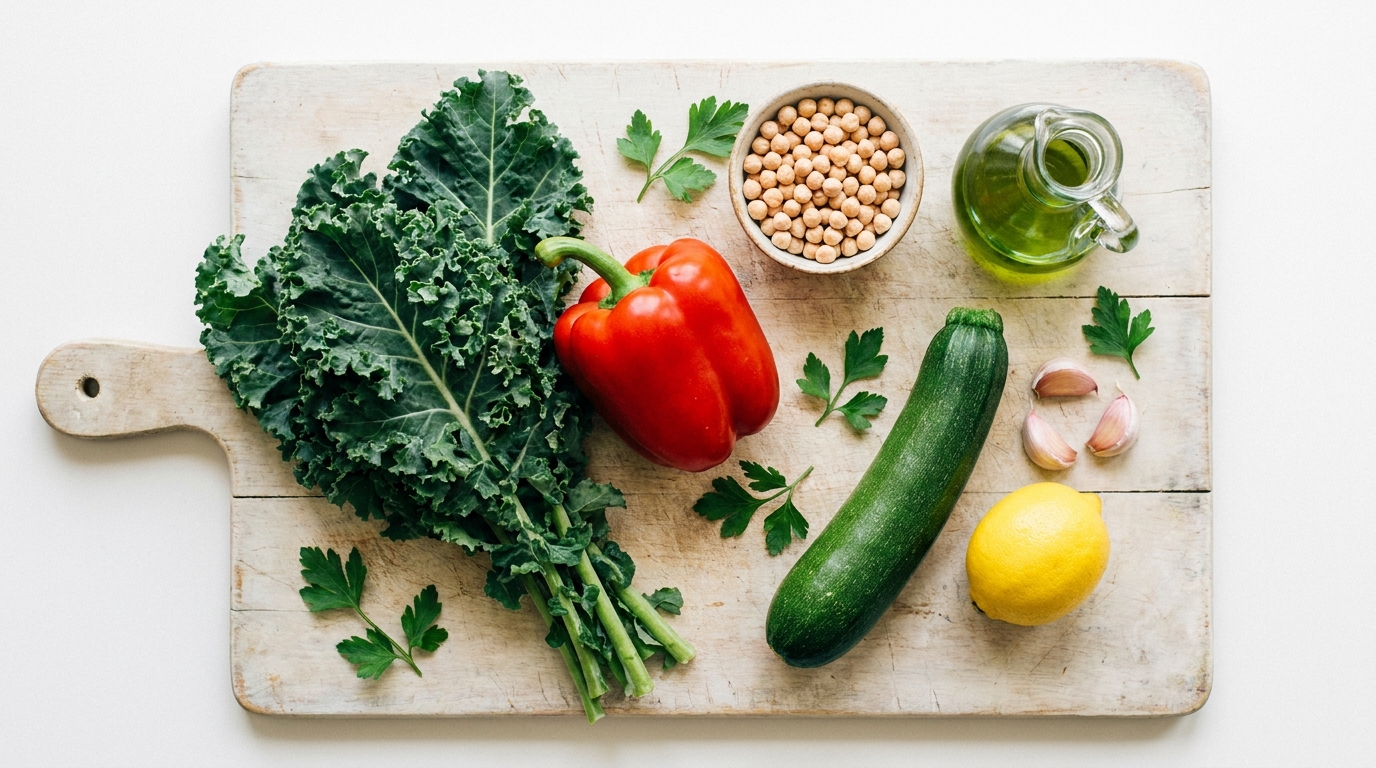
- 1 cup organic jasmine rice or quinoa
- 2 cups organic kale or spinach, chopped
- 1 organic red bell pepper, sliced
- 1 organic zucchini, diced
- 1 cup organic chickpeas, cooked or rinsed from a tin
- 2 tbsp cold-pressed extra virgin olive oil
- 2 cloves organic garlic, minced
- 1 organic lemon — juice and zest
- Sea salt, black pepper
- Fresh parsley or coriander to finish
Method
- Cook the rice or quinoa in filtered water. Set aside.
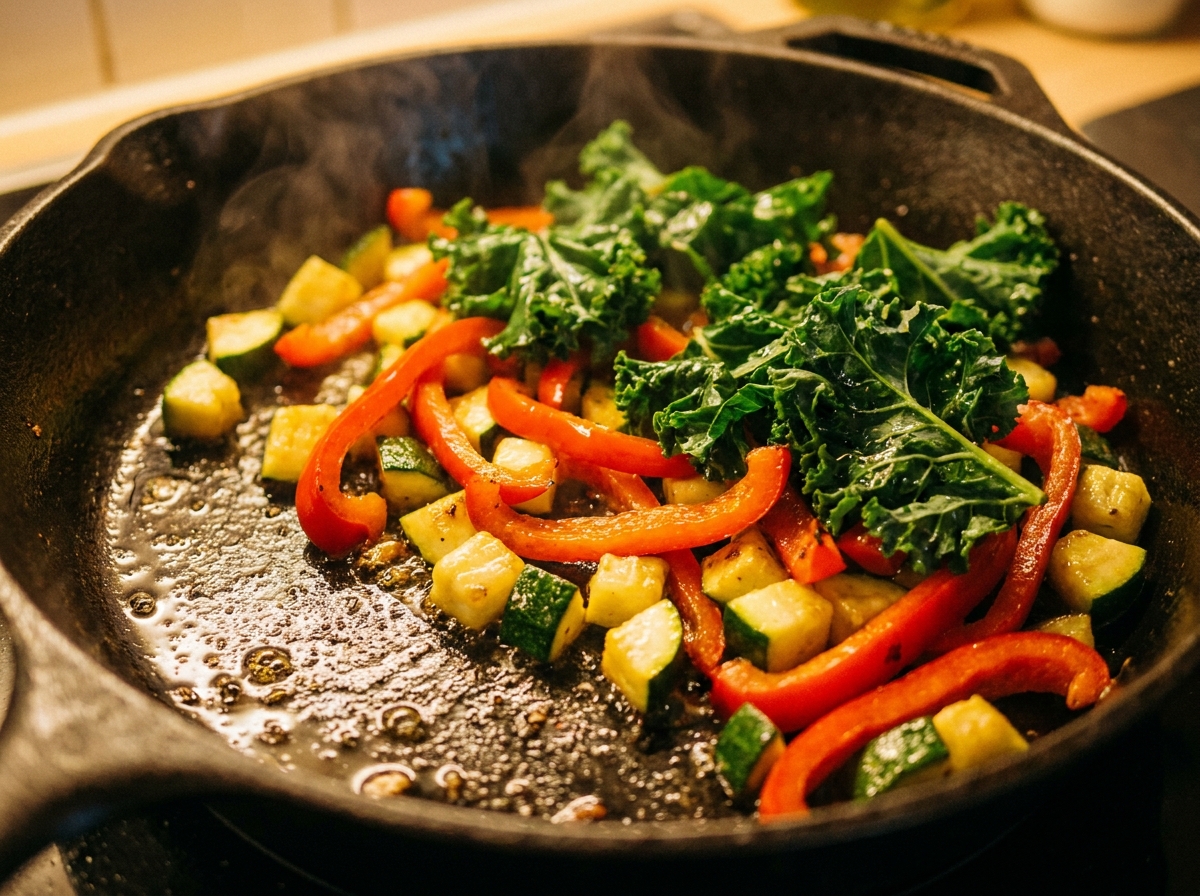
- Warm the olive oil in a stainless steel or cast-iron pan over medium heat. Add the garlic for 30 seconds, until fragrant.
- Add the pepper and zucchini. Sauté 5–7 minutes — tender, still vivid.
- Stir through the kale or spinach for 2–3 minutes, until just wilted. Off the heat.
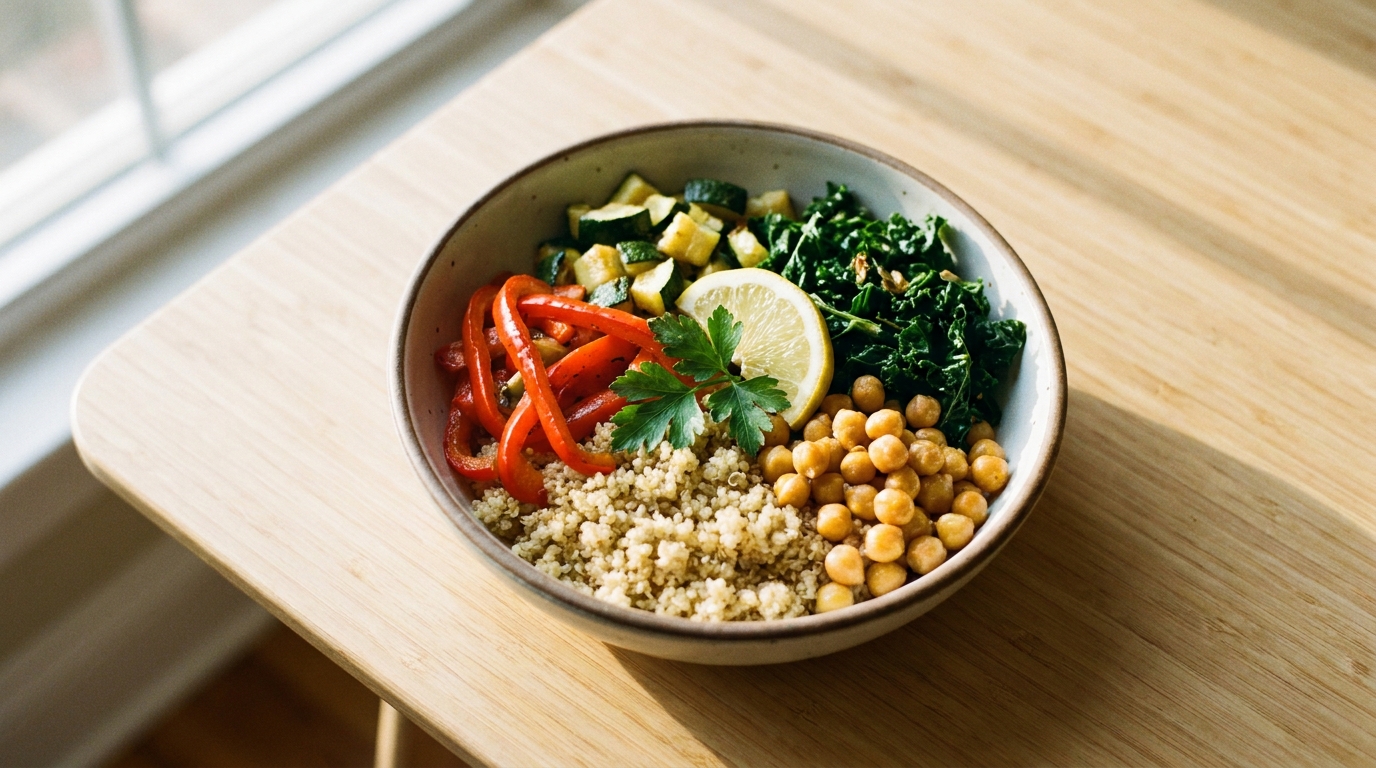
- Divide the grain between two bowls. Top with the vegetables and chickpeas, then the lemon juice, zest, salt and pepper.
- Finish with the herbs and serve warm.
Why each choice is here
This is the part a recipe card never gives you. Each one names its lesson.
Organic vegetables, and why organic specifically
Eating plants brings bicarbonate into the body — the same alkalising compound plants use to hold an intracellular pH of 7.2–7.5 for photosynthesis. That bicarbonate arrives with potassium and magnesium alongside it.
Organic matters for a mechanical reason, not a moral one: pesticides are stored in the plant’s central vacuole and in the fibre. Washing does not reach either.
The greens, and the chickpeas
Chlorophyll sits at the centre of the green. Its structure is near-identical to the heme unit in your blood — the difference is magnesium at the centre instead of iron. Eat green and you are alkalising and giving the body what it builds red blood cells from at the same time.
The chickpeas carry protein, fibre and minerals together. In his framework that makes them a staple rather than an indulgence — something the week is built on.
Olive oil, at medium heat and no higher
Extra virgin olive oil is a good fat used correctly — low heat or raw. It is not a high-heat oil. A brief medium-heat sauté stays inside that. Cold-pressed and organic, to avoid rancidity.
The lemon, which is not the contradiction it looks like
Acidic on the tongue, alkalising once metabolised. The citric acid converts to bicarbonate and alkaline mineral salts. It is doing the same job as the vegetables, in a different form.
Nobody wrote this page
It came out of a question. The lessons were already in the container; the coach read them and answered.
It cites its sources
Every claim points at a lesson by name, so a person can go and read the thing it came from.
A member can do this themselves
Tonight’s dinner, a shopping list, a week of meals — the same question, asked from their own container.
Ask the coach yourself → Get the library
Educational, from Dr. Henry Ealy’s published teaching. Not medical advice, and not a substitute for a professional who knows your situation.